
Key Takeaways
- Understand the core components of a hydro pneumatic system for optimized water delivery in buildings.
- Learn how to select the right hydro pneumatic pressure system tailored to your building's unique needs.
- Discover the benefits of hydro pneumatic booster pumps for maintaining consistent water pressure across multi-story structures.
- Implementing a hydro pneumatic system can significantly reduce energy consumption and maintenance costs.
- Explore the differences between tank feeding and tap feeding systems for effective water distribution.
Modern commercial and industrial buildings depend on a reliable water supply every day. Whether it is a high-rise office, hotel, hospital, shopping mall, manufacturing plant, warehouse, or educational institution, maintaining consistent water pressure is essential for smooth operations. Traditional water distribution methods often struggle to deliver uniform pressure across multiple floors or long piping networks. This is where a hydro pneumatic system becomes an ideal solution.
A well-designed hydro pneumatic system delivers water at consistent pressure without relying on large overhead storage tanks. It automatically adjusts to changing water demand while reducing energy consumption and improving operational efficiency. Choosing the right system is an important investment because it directly affects water availability, equipment life, maintenance costs, and user satisfaction.
At Neer Tech, businesses receive advanced hydro pneumatic solutions designed to meet the requirements of commercial and industrial projects. From system selection to installation guidance, every solution is developed with quality, reliability, and long-term performance in mind.
What Is a Hydro Pneumatic System?
A hydro pneumatic system, often referred to as an HPN system, is designed to maintain steady water pressure and improve flow efficiency across a building's plumbing network. At its core, the system consists of a pressure pump and a pressure tank. The pressure tank contains a rubber bladder surrounded by pressurized air, taking advantage of the fact that water is a non-compressible fluid while air can be compressed and expanded.
When a tap or shower is opened, water stored in the tank is used first, which causes the pressure inside the tank to drop. A pressure switch detects this drop and automatically triggers the pump to switch on, refilling the tank until the set pressure is reached, at which point the pump shuts off. This entire process happens automatically, removing the need for constant manual monitoring or intervention, which is one of the biggest practical advantages a hydro pneumatic setup offers over traditional gravity-fed systems.
Why Hydro Pneumatic Pressure Matters in Modern Buildings
As cities grow vertically, buildings are reaching greater heights, and maintaining consistent water pressure across every floor becomes an engineering challenge rather than a simple gravity solution. Traditional overhead tank systems often struggle to deliver adequate pressure to upper floors, leading to weak flow and inconsistent supply exactly where it matters most.
A well-engineered system for hydro pneumatic pressure control addresses this directly by using pump-driven pressurization rather than relying purely on gravity or tank height. This means every floor, regardless of its position in the building, receives water at a consistent and reliable pressure. For high-rise residential complexes, hotels, hospitals, and commercial towers, this kind of dependable pressure is not just a comfort feature but often a functional necessity, particularly in healthcare settings where water availability during critical operations cannot be compromised.
Core Components of a Hydro Pneumatic Booster System
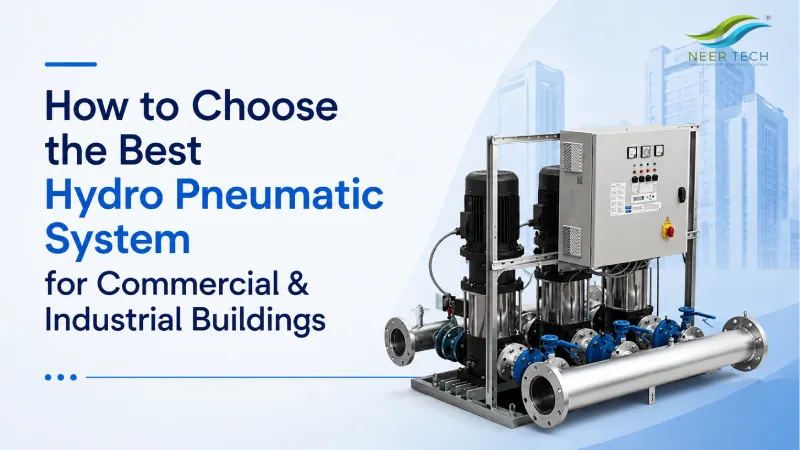
Understanding what goes into a hydro pneumatic booster pump setup helps in appreciating why proper design and component selection matter so much. The pressure pump drives water through the pipeline network, maintaining the flow needed to meet building demand. The pressure tank, fitted with its rubber bladder, stores water under pressurized air, allowing for immediate water delivery the moment a tap is opened rather than waiting for the pump to activate from a complete standstill.
The pressure switch plays a critical monitoring role, automatically triggering the pump when tank pressure drops below a set threshold and shutting it off once the target pressure is restored. A control panel ties these components together, managing overall system operation and maintaining both safety and efficiency throughout the process. When these components are properly matched to a building's actual piping design and water demand, the result is a hydro pneumatic booster pump system that operates smoothly with minimal manual oversight.
Types of Hydro Pneumatic Systems Based on Application
Not every building has the same water distribution requirement, and hydro pneumatic systems are generally configured in one or two ways depending on the setup needed. Tank feeding systems are typically used to fill overhead tanks from a single central water source, ensuring uniform distribution across multiple tanks in larger complexes or multi-building campuses.
Tap feeding systems, on the other hand, are designed for situations where all taps throughout the building need to receive pressurized water directly, without relying on intermediate overhead tanks. This configuration is especially common in commercial spaces, hotels, and high-rise buildings, where consistent pressure needs to reach every outlet directly and reliably. Choosing between these configurations, or a combination of both, depends heavily on the building's layout, water source, and consumption pattern, which is why professional system design matters so much in getting the setup right the first time.
How to Choose the Right System for Your Building
Selecting the best hydro pneumatic system for a commercial or industrial building requires looking beyond a generic, one-size-fits-all product. The first consideration is understanding the building's actual water demand, factoring in the number of floors, occupancy levels, and peak usage periods, since a system undersized for demand will struggle to maintain pressure during high-use hours.
Piping design is equally important, since a hydro pneumatic booster pump setup needs to work in coordination with existing plumbing infrastructure rather than against it. Pump selection should focus on efficiency rather than raw power alone, since an oversized pump wastes energy while an undersized one fails to deliver adequate pressure. The pressure tank's size and bladder quality also affect how often the pump cycles on and off, which in turn impacts both energy consumption and the long-term wear on the pump itself.
Local water supply conditions matter too. In a city like Ahmedabad, factors such as building height, municipal supply pressure, and neighborhood-specific usage density all influence how a hydro pneumatic system should be designed. This is why working with a provider who understands regional water conditions, rather than applying a generic national template, tends to produce far more reliable long-term results.
Practical Benefits of Installing a Hydro Pneumatic System
Buildings that adopt a well-designed hydro pneumatic system typically see several practical benefits. Consistent water pressure across every floor removes the common complaints associated with weak flow on upper levels. Automated operation through pressure switches significantly reduces the need for manual pump management, freeing up facility staff for other tasks. Because the pump only activates when pressure actually drops, energy consumption tends to be more efficient compared to continuously running systems.
There is also a space and hygiene advantage in many setups, since hydro pneumatic systems can reduce dependency on large overhead tanks, which are prone to sediment buildup, bacterial growth, and rust over time. By storing pressurized water in a sealed tank rather than an open or semi-open overhead reservoir, buildings can maintain cleaner, fresher water for both drinking and industrial use.
Why Professional Design Makes a Real Difference
A hydro pneumatic system is only as good as the engineering behind it. Simply installing a pump and pressure tank without properly accounting for piping layout, demand patterns, and building-specific factors often leads to inconsistent performance, frequent pump cycling, or premature equipment wear. Neer Tech approaches every project by first studying the site's actual piping design and consumption patterns before recommending a system, rather than applying a standard configuration regardless of building type.
Neer Tech can choose pumps, pressure vessels, and control components based on actual demand rather than conjecture thanks to this site-specific methodology, producing systems that function dependably in commercial, industrial, and residential settings. Neer Tech's involvement typically continues well beyond installation, with ongoing technical guidance and maintenance support helping buildings sustain consistent hydro pneumatic pressure over the long term rather than just at the point of commissioning.
Why Choose Us
Neer Tech brings genuine engineering discipline to hydro pneumatic system design, studying each building's piping layout and actual water demand before recommending pumps, tanks, and controls rather than offering a generic, pre-packaged solution. As a trusted name for hydro pneumatic system installation across Ahmedabad, the company designs both tank feeding and tap feeding configurations tailored to residential complexes, hotels, hospitals, commercial towers, and industrial facilities. Its focus on maintaining stable hydro pneumatic pressure throughout a building, regardless of floor height or fluctuating demand, helps clients avoid the common frustrations of weak flow and inconsistent supply. Beyond installation, Neer Tech supports every hydro pneumatic booster pump project with ongoing technical guidance and maintenance, helping buildings sustain efficient, low-maintenance performance for years rather than just at the point of commissioning.
Conclusion
A well-designed hydro pneumatic system brings consistent water pressure, automated operation, and long-term energy efficiency to commercial and industrial buildings of every size. From understanding actual water demand to selecting the right pumps and pressure vessels, proper engineering makes the real difference between a system that performs reliably and one that struggles under daily use. Neer Tech's site-specific approach to hydro pneumatic pressure design, backed by years of experience across Ahmedabad, offers building owners and facility managers a dependable path to consistent, hassle-free water supply.
Need a reliable hydro pneumatic system for your building? Contact Neer Tech at +917984377525 or write to [email protected].